

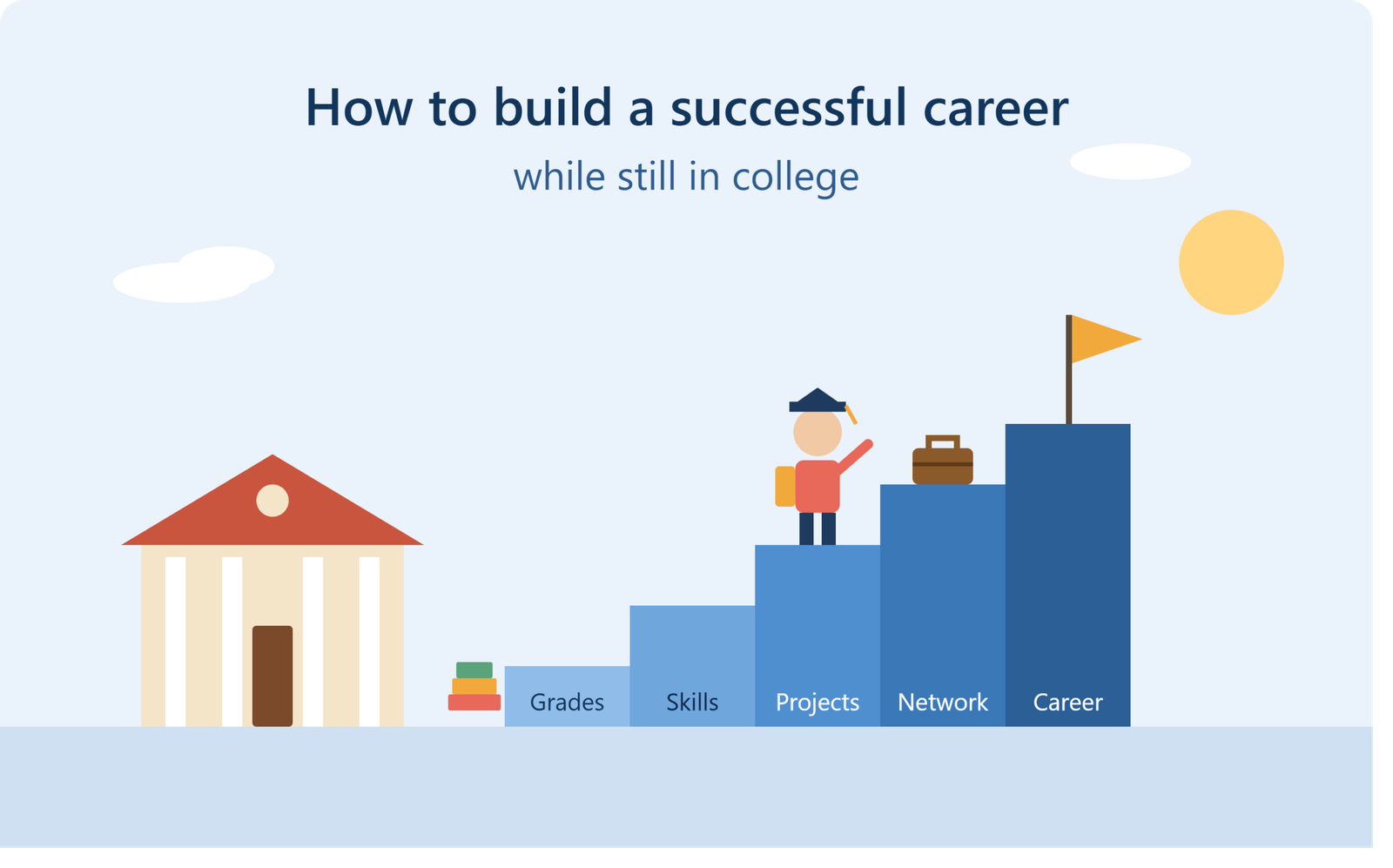
Let me start with something most college advice skips: your degree alone won’t carry you. Lectures, assignments and exams matter, sure, but the students who walk out of campus with job offers are usually the ones who did something extra along the way. If you’re a student in the USA, you’ve probably spent late nights searching for things like insuredhealthpro while sorting out health coverage, study resources and the thousand small things that come with student life. Between all that, building a career feels like a lot. The good news is you don’t need to do everything at once. You just need to start early and stay consistent.
Here’s how I’d approach it if I were starting college again tomorrow.
Start With Honest Self-Awareness
Before you apply anywhere or email anyone, spend a weekend figuring out what you actually like. Not what your parents expect, not what your friends are choosing. What do you enjoy doing, even when it’s hard?
Grab a notebook and write down three things: subjects that make you lose track of time, tasks you’re naturally good at, and work environments where you feel energized. It sounds basic, and it is. But most students skip it and end up chasing jobs they don’t care about.
You don’t need a perfect five-year plan. Honestly, nobody has one. What you need is a rough direction, because career development is much easier when you know which way you’re walking. Even if that direction changes in your second year (it probably will), you’ll have learned something about yourself.
Treat Your Classes as a Starting Point, Not the Finish Line
Good grades help. Employers do look at GPA, especially for your first job. But grades are only one piece. A student with a 3.4 and two solid projects often beats a student with a 3.9 and nothing else.
So use your classes smartly. When a professor assigns a project, ask yourself how it could become something you can show later. A marketing class assignment can turn into a real campaign case study. A coding assignment can become a portfolio piece on GitHub. A research paper can become a conversation starter in an interview.
Also, go to office hours. Seriously. Most students never do, which is exactly why it works. Professors know people, and they remember the students who showed up with real questions.
Get Real Experience Through Internships
Nothing replaces actual work experience. Internships are the fastest way to find out whether a career path suits you, and they’re the number one thing recruiters look for on a student’s resume.
Don’t wait until senior year. Many companies run programs for sophomores and even freshmen. Start searching early, apply widely, and don’t get discouraged by rejections. I know people who sent out forty applications to land one offer. That’s normal, not a sign you’re failing.
A few practical tips:
- Check your college career center first. They often have exclusive listings and employer connections.
- Use job boards, but also email small companies directly. Smaller teams often give students more hands-on work than big corporations do.
- Don’t ignore unpaid or low-paid roles at nonprofits or startups if you can afford them. The skills and references can be worth it.
- If you can’t find a formal internship, create your own project. Build a website for a local business, run social media for a campus club, or analyze public data and publish your findings.
Experience doesn’t have to look fancy. It just has to be real.
Take a Smart Part-Time Job
A lot of students work because they need the money, and that’s completely fair. The trick is to make that job work harder for you. A part-time job isn’t just a paycheck. It teaches you reliability, customer handling, teamwork and how to stay calm when things go wrong.
If you have a choice, pick roles connected to your field. A business major working in a campus bookstore can learn inventory and sales. A communications student can work for the university’s media office. An accounting student can help with tax prep during filing season.
And even if your job has nothing to do with your major, don’t dismiss it. Employers love hearing how you balanced shifts with coursework. It shows discipline, and discipline is hard to fake.
Build Your Personal Brand Early
This phrase sounds corporate, but the idea is simple: when someone Googles your name, what do they find? Let’s make sure it’s something good.
Your personal brand is the impression people form about you based on your work, your online presence and how you communicate. You don’t need thousands of followers. You need a clean, honest, professional picture of who you are.
Start with the basics:
- Use a professional email address (not the one you made in eighth grade).
- Make your social media safe to be seen. Not boring, just thoughtful.
- Create a simple portfolio site if your field allows it. Even a one-page site with your projects and contact info helps.
- Share what you’re learning. A short post about a book, a project or a conference you attended shows initiative.
Consistency beats perfection here. Post a little, often, and be yourself.
Make LinkedIn Work for You
If you only do one thing online, set up a proper LinkedIn profile. Recruiters really do use it, and it’s often the first place they check after receiving your application.
Use a clear photo (a decent phone picture against a plain wall works fine), write a headline that says more than “Student at XYZ University,” and fill your summary with specifics. Mention what you’re studying, what you’re interested in, and what you’ve worked on.
Then connect with people. Classmates, alumni, professors, guest speakers, people you met at events. When you send a request to someone you don’t know, add a short, genuine note. Something like, “Hi, I’m a junior studying finance at your alma mater and really enjoyed your post about entry-level analyst roles. I’d love to connect.” Simple, polite, human.
Learn the Art of Networking (Without Feeling Fake)
Many students hear “networking” and cringe. They imagine awkward events with name tags and forced small talk. But networking is really just building real relationships over time.
Here’s a mindset shift that helped me: stop asking “What can this person do for me?” and start asking “What can I learn from them?” People enjoy talking about their work. Most are happy to give twenty minutes to a curious student.
Try informational interviews. Reach out to someone working in a role you find interesting and ask for a short chat. Prepare three or four thoughtful questions, listen carefully, and send a thank-you note afterward. Do this a few times a semester and you’ll be surprised how many doors open.
Join student clubs, professional associations and campus events too. Not to collect contacts, but to become a familiar, trusted face. Opportunities often come through people who know you and think of you first.
Find a Mentor or Two
A good mentor can save you years of trial and error. This might be a professor, a senior student, an alumni, or a professional you met through an internship.
You don’t have to formally ask “Will you be my mentor?” That can feel heavy. Instead, build the relationship naturally. Ask for advice on a specific decision, update them on how things went, and keep the connection alive. Over time, it becomes a real mentorship.
Remember that mentors are not there to hand you a job. They offer perspective, honest feedback and sometimes an introduction at the right moment. Respect their time and show that you actually act on their advice.
Sharpen Your Soft Skills
Technical knowledge gets you an interview. Soft skills get you the job and help you keep it. Communication, teamwork, adaptability, problem-solving and time awareness are consistently ranked at the top by employers, no matter the industry.
The nice thing is that college is full of chances to practice them:
- Group projects teach collaboration (and patience).
- Presentations build confidence in speaking.
- Leading a club event teaches organization and responsibility.
- Handling a disagreement with a roommate teaches conflict resolution, believe it or not.
Pay attention to feedback, too. If a teammate says you tend to go quiet in meetings, work on speaking up. If someone says you’re great at keeping everyone organized, lean into it. Knowing your strengths and gaps is half the battle.
Master Time Management Before It Masters You
Here’s the honest truth: trying to study, work, intern and have a social life is exhausting if you’re disorganized. Strong time management is the skill that makes everything else possible.
Some habits that actually work:
- Use one planner or calendar. Put classes, deadlines, work shifts and personal commitments in one place.
- Plan your week every Sunday. Fifteen minutes is enough to see what’s coming.
- Break big tasks into smaller chunks. “Write research paper” is scary. “Outline the introduction” is doable.
- Protect sleep and downtime. Burnout is real, and it ruins both grades and careers.
- Learn to say no. You can’t join every club or take every opportunity. Choose the ones that matter.
Also, take care of your health. Between stress, late nights and tight budgets, students often neglect it. Understanding your coverage options, checking what your school offers, and keeping up with basic medical needs will save you trouble later. A healthy student is a productive student.
Build a Strong Resume That Tells a Story
Your resume is not a list of everything you’ve ever done. It’s a short, focused story about why you’re a good fit for a particular role.
Keep it to one page. Lead with your education, then experience, projects, leadership and skills. Use action verbs and, wherever possible, numbers. Instead of “Helped with social media,” try “Grew club Instagram following by 40% in three months through weekly content planning.” See the difference?
Tailor it for each application. Yes, that takes extra time. But a resume that mirrors the language of the job posting performs far better than a generic one. Ask your career center or a trusted mentor to review it before you send it out. Fresh eyes catch mistakes you’ve stopped seeing.
Pick Up In-Demand Skills Outside the Classroom
Your curriculum can’t cover everything. Free and affordable online courses let you learn practical skills on your own schedule. Depending on your field, think about things like data analysis, basic coding, digital marketing, public speaking, project management or design tools.
You don’t have to collect twenty certificates. Pick one or two skills, learn them properly, and apply them to a real project. A certificate with nothing behind it means little, but a skill you’ve actually used speaks for itself.
Get Involved, But Be Selective
Leadership roles in clubs, volunteering, student government or sports show employers that you can take initiative and work with others. But quality beats quantity. Being the treasurer of one organization and actually doing a great job is far more impressive than being a silent member of seven.
Choose activities that connect to your interests or the career you’re exploring. If you want to work in healthcare, volunteer at a clinic. If you’re drawn to business, help run a campus entrepreneurship event. Every role you take should teach you something or build a relationship.
Don’t Be Afraid to Fail
Let’s be real. You’ll probably get rejected from some internships. You might bomb an interview. You may start a project and abandon it. All of this is part of the process.
The students who succeed aren’t the ones who never fail. They’re the ones who learn quickly, adjust and keep going. After every setback, ask yourself what you can take from it, and then move on. College is a relatively low-risk place to make mistakes, so use that to your advantage.
A Simple Roadmap You Can Follow
If all this feels overwhelming, here’s a rough year-by-year guide:
Freshman year: Explore. Take varied classes, join a couple of clubs, visit the career center, and keep your grades solid.
Sophomore year: Narrow your interests. Create your LinkedIn profile, update your resume, and apply for your first internship or relevant part-time job.
Junior year: Go deeper. Take on a leadership role, complete a meaningful internship, and build a strong network and mentor relationships.
Senior year: Convert. Refine your resume, apply for full-time roles, practice interviews, and reach out to your network early.
Adjust it to fit your life. Not everyone follows the same timeline, and that’s perfectly okay.
Final Thoughts
Building a career while you’re still in college isn’t about being perfect or ahead of everyone else. It’s about making small, steady choices that add up. One internship, one new connection, one skill, one honest conversation with a mentor. Do that consistently for a few years, and you’ll graduate with far more than a diploma.
Start today with something small. Update your LinkedIn headline, email a professor, or sign up for one online course. Momentum matters more than perfection. Your future self will be glad you started now.